I learnt tech without a laptop. Now I make sure others don’t have to

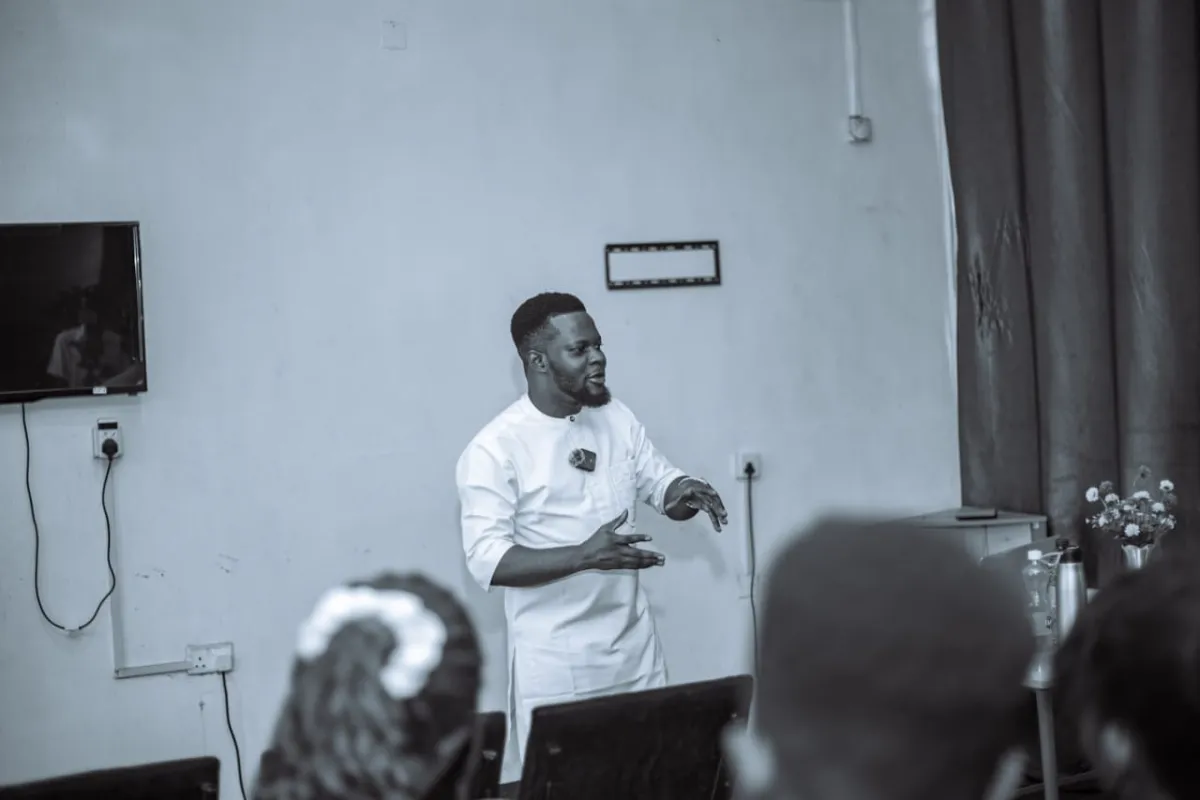
By John Kent-Adebayo, guest contributor
In 2013 I decided I wanted to work in tech. I did not own a laptop.
When Andela came to Abeokuta I was one of their early learners. I wanted to build mobile apps. But learning to code on borrowed time, on other people's machines, wears you down. You get one evening of progress, then three days of waiting. Eventually I moved to digital marketing, because I could do most of it on a phone.
It worked out. Marketing led me to design, design to growth, and growth to product. Today I lead product at Notch Software, where we build NotchHR. But I still think about how close I came to quitting, and how little it had to do with ability. I just didn't have the tools.
I got my first laptop in 2018, in my final year studying computer science at the Federal University of Agriculture, Abeokuta. It cost ₦75,000. That laptop still works today, and over the years it has passed through the hands of several people starting their own tech journey.
The problem is not talent
Abeokuta is full of young people who want in. What they don't have is the basics most tech training assumes: steady power, data that doesn't run out mid-video, and a computer they can use for more than an hour.
Most programmes skip this part. They put the course online, tell people to "just practise", and count whoever finishes. The ones who drop out are usually the ones without a laptop, and nobody asks why.
I remembered my own years without a laptop when we set up ATB Tech Hub. So we fix the basics first, before we ask anyone to commit to a course. The hub is an initiative of the Abiodun & Yinka Atobatele Foundation, in Igbehin, Abeokuta. I run its programmes. Anyone can walk in and use the power, the internet and the computers for free.
What happened when we removed the excuse
In 2024 we ran two training cohorts. 837 people registered across both. Most came in as complete beginners, and Data Analytics was the track most people chose.
The Ogun State Skills Fund also engaged the hub to train 35 people in software development, with six months of support after the training. With Rise To Inspire Africa and support from the US Consulate, we ran EmpowerHER, where 100 young women were selected from more than 220 applicants. And during the summer holiday, 134 children aged 7 to 15 learnt Scratch, design and computer basics.
None of that needed a new idea. It needed a room with light, internet and machines, and people willing to show up.
From our second 2024 cohort, 10 trainees were offered internships at Notch Software, the company where I work. Nine started, and six were kept on as QA testers after the internship. Timilehin Solanke still tests NotchHR today. Pamilerin Oyewusi did the same, and now works with me at Savey Africa. Neither had worked in tech before the hub.
What I have learnt running it
Access comes before curriculum. A brilliant course is useless to someone who can't get online. Fix power and devices first.
Beginners need a place, not just a link. People learn faster when they sit beside others who are stuck on the same thing. The hub works partly because nobody is learning alone.
Not everyone should become a developer. I say this a lot: everyone can be digitally trained, but not everyone can be a techie. Some of our best outcomes are people who now use data or design in jobs they already had. That counts.
Many start, fewer finish. Our own data shows it. We now spend the first week on orientation: we explain each track in plain language and let people switch if they picked the wrong one. It helps. It has not fixed it.
Outside Lagos is not behind Lagos
There is a habit of treating everything outside Lagos as a pipeline that eventually moves to Lagos. I don't buy it. The people we train in Abeokuta can work for anyone, from anywhere, if they have the basics.
So my ask is simple. If you run a tech programme, find out how many of your learners own a laptop. If you are a company with old machines in a store, give them to a hub. And if you are in Abeokuta and want to learn, come in. The light is on.
The way I see it, it goes in order: talent, then community, then startups. Train people, give them a place to stay together, and an ecosystem grows out of it.
John Kent-Adebayo is Head of Product at Notch Software, founder of Savey Africa, and Program Manager at ATB Tech Hub, Abeokuta.
Related stories
More from across the corridor